Drive a new Melissa street at six in the evening and the growth is written in fences. On the left, a finished cedar run with a dog surveying the sidewalk through the gate. On the right, builder dirt, a survey stake, and a backyard that ends wherever the kids decide it does. Melissa is adding households faster than almost any city in the country, and every one of those households reaches the same week where the fence stops being a plan.
The city has opinions ready for that week. Melissa requires a permit for any fence or part of one, writes its post recipe into the code, and allows exactly twenty-four linear feet of same-material repair before the permit applies. None of that is hard when the contractor knows it cold. All of it is annoying when a Melissa homeowner discovers it from a stop-work notice.
Fences Texas puts Melissa homeowners in touch with one contractor who builds fences here. Your part is one description; his is measuring and quoting. The decision belongs to you.
Rough footage is fine. No phone number needed for the estimate.
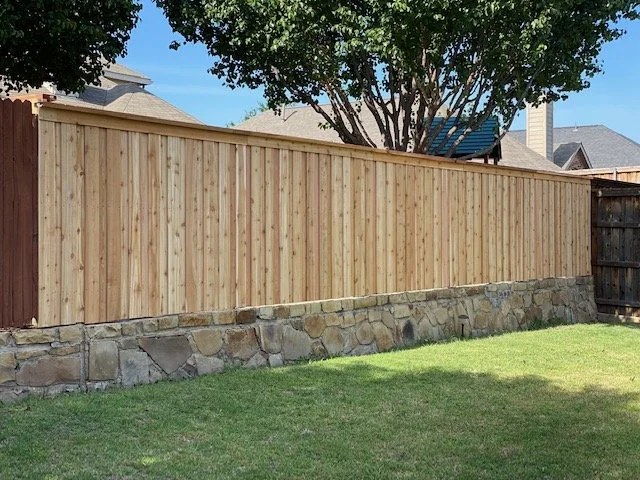
Board-on-board cedar privacy fence with trim and cap, built on a stone base.
Estimate my fence cost
Start with a ballpark for your yard. No phone number needed for the estimate.
Step 1 of 2: Your estimate
Homeowners across DFW get matched with local fence pros
What happens next
1
Estimate first, form second.
Enter your footage and material leanings and look at the range before any phone number is requested. Once sent, the form goes to a contractor whose crews build on Melissa streets week in, week out.
2
He calls to book the measurement.
New subdivisions mean fresh surveys and HOA spec sheets, so he will ask which community you are in and whether the association has already approved a style.
3
The quote comes back written and itemized.
Gates, tear-out if an older fence stands, and the city permit each stand alone. If the quote fits your budget, hire him. If not, the quote stays with you and nothing is owed.
What the finished Melissa fence looks like
On a Liberty or North Creek street it looks like the neighborhood growing up: six foot cedar, board-on-board, running lot line to lot line with the gate hung where the trash cans actually roll. Melissa subdivisions were drawn tight, most lots under a quarter acre, so a well-built fence is the difference between a yard that feels borrowed and one that feels owned. Kids get a boundary, the dog gets a patrol route, and the patio stops being a stage for the street behind.
Under the boards, the Melissa code does quiet, specific work. Unless the city has expressly authorized vinyl, a privacy fence here stands on metal posts at least two and three-eighths inches across, set two feet deep in concrete. That recipe exists because Collin County clay moves, and Melissa builders and the city both watched shallow wood posts lean across whole new streets within a few summers. Your contractor builds to that spec by default and can show it on the quote.
How to get a firm number on a Melissa fence
Footage on Melissa lots is mercifully ordinary, leaving the material choice to do most of the talking. Cedar leads, iron follows, pine sits at roughly half of cedar's level, and pool mesh is figured separately. Gates are the classic forgotten line, and on a young Melissa lot the first fence often needs two: the side gate everyone uses and the wide gate the mower and future trampoline need.
Run your footage through the calculator and the range lands in about half a minute. Because more than half of Melissa homes were built in 2020 or later, many first fences here start from bare dirt with no tear-out, which keeps the quote cleaner than a replacement job. The contractor's measurement then fixes the firm price in writing, with permit and gates broken out, so you can compare it against the range and see exactly where they differ.
Rough footage is fine. No phone number needed for the estimate.
The annoying parts of a first Melissa fence, handled
Start with the city: Melissa permits any fence or part of a fence, and the code's material bans catch people out, since slats threaded through chain link and fences built from materials never made for fencing are both prohibited. Retaining walls at four feet need an engineer's design. Your contractor files the permit, designs inside the eight foot rear and side cap, and keeps front yard work to the decorative, three foot, open styles the code allows there.
Then the HOA: Liberty, North Creek, Meadow Run, and most growth subdivisions in Melissa layer association fence rules under the city code, and the approval packet is part of the job when your contractor handles it. Texas 811 marks buried lines before digging, a short step that matters on new Melissa lots where utility runs are fresh and shallow.
How getting matched works
1
The contractor measures your lot and checks the community spec.
He confirms the survey corners on a new lot and prices the fence the HOA will actually approve.
2
You read an itemized written quote.
Post size and depth appear on it in plain terms, so you can verify the Melissa code recipe is in the build, not just in the sales talk.
3
The crew installs and you walk it together.
Gates swing, latches catch, and anything crooked gets named on that walk, before final payment.
What happens after you send the form: Your contractor will call within one business day to schedule your free measurement. The call is brief: confirm your details, choose a measuring time, hang up. Your number is not sold to call centers, automated dialers never get it, and no one pushes you to sign. Every matched contractor backs the work with a one-year workmanship warranty in writing.
Cedar, pine, or iron: the Melissa short version
Cedar is the Melissa subdivision standard: it weathers the Collin County sun gracefully, takes the stain colors associations approve, and board-on-board keeps a tight lot private. Pine, at roughly half of cedar's price, tempts plenty of first fence buyers. The honest trade is faster aging, which can mean a second fence sooner than planned.
Melissa fence questions
What does a fence in Melissa cost?
The range comes from running your footage and material through the calculator. Relatively, cedar is the top figure, iron sits beneath it, pine comes in near half of cedar per foot, and gates are priced on their own.
How long does the whole thing take?
Most fences are finished within 2 to 3 weeks of the quote visit; most backyard fences go up in 1 to 2 days once the crew starts. In fast-building parts of Melissa, HOA approval is usually the pacing item, so your contractor files it early.
Do I need to be home?
Try to be there for the measuring visit; on a new Melissa lot, gate placement and corner locations are easier agreed in person. Build days do not need you.
What about the permit and my HOA?
Each of them is carried as part of the job. Any fence in Melissa needs a permit; your contractor obtains it and builds to the post specification the code sets out.
How am I matched with a contractor, and is it free?
Nothing is charged for the match. One description from you, a pairing with a contractor who wants the job, and a quote with costs itemized: that is the whole exchange.
What if the damage is limited to one side?
Yes, and Melissa has one wrinkle: same material repairs that change neither location nor size stay permit free up to twenty-four linear feet under the code.
Get your Melissa fence priced
Send the form and get a measured, written price from a contractor who knows which Melissa streets are still dirt and which are already fenced. Your street is filling in either way.
Rough footage is fine. No phone number needed for the estimate.